

About The Seals

About Elephant Seals
Seals on the sand
The northern elephant seal is the second largest seal in the world, after the southern elephant seal. Much more agile in their ocean environment, an elephant seal moves on land with considerable effort, by using its front flippers and belly. Adult males are 14 to 16 feet (4 to 5 m) in length and 4,000 to 5,000 pounds (1,400 to 2,300 kg) in weight. The females are much smaller at about 9 to 12 feet (2.5 to 4 m) in length and weigh 900 to 1,800 pounds (400 to 800 kg). Pups are 3 to 4 feet (1 m) long at birth and weigh about 70 pounds (32 kg).

What's Happening On The Beach?
Month by Month at the rookery
The number of seals at the rookery peaks three times during the year: in late January when most births have occurred, around the first of May at the peak of the juvenile/adult female molt, and in late October during the fall or juvenile haul-out. The annual cycle begins in November with the arrival of mature males at the end of the month.

Why Elephant Seals Are Awesome
Fun Facts
- Elephant seals take their name from the large proboscis of the adult male (bull), which resembles an elephant’s trunk.
- Male elephant seals weigh as much as a small truck or cargo van.
- Elephant seals are shielded from extreme cold more by their blubber than by fur.


Plan Your Visit
Viewing areas are open every day. There are no fees or reservations required. No public transportation is available. There are no restrooms at the viewing area so plan accordingly. This is a pack it in/pack it out site; please take all trash with you.
One of the most popular seasons for viewing the elephant seals is December to March, which can bring winter storms and windy conditions. Weather conditions at Piedras Blancas are usually moderate, but weather can change quickly. Afternoons tend to be colder and windy. Flat shoes, a jacket and sunscreen are recommended at all times of the year.
News | Events
News

A survival story at Piedras Blancas
December 28, 2023. High tide 9:52 AM, 20-25 ft waves combine in the perfect storm... High tide, combined with huge waves flooded the Piedras Blancas Elephant Seal rookery beaches for hours, with relentless force. Vulnerable newborn northern elephant seal pups and...
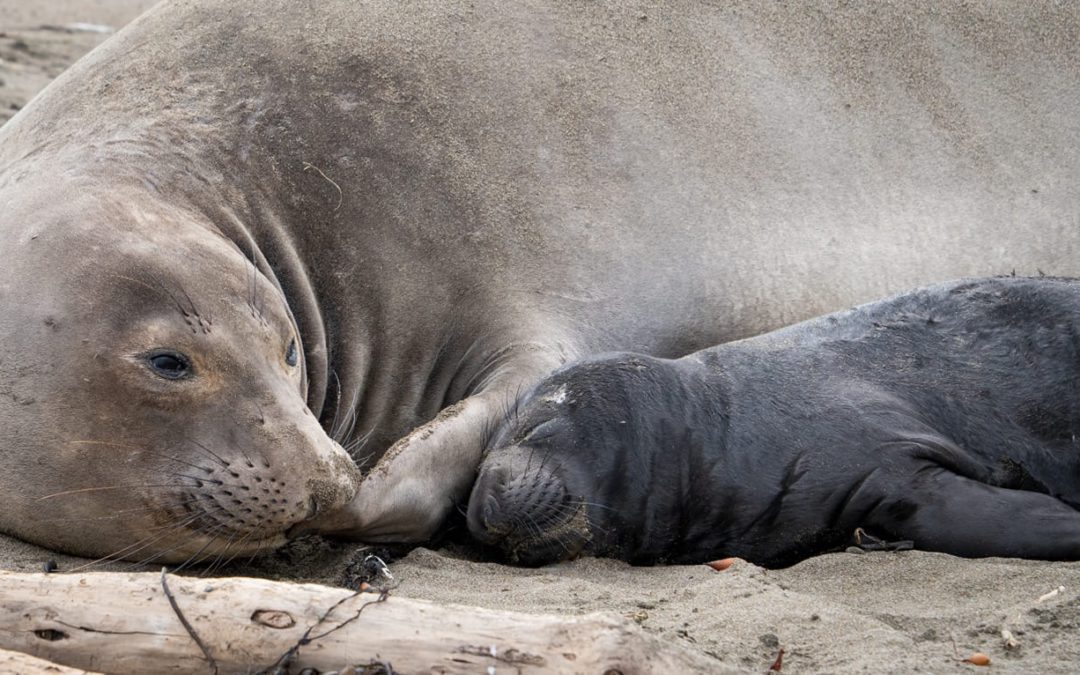
First pups arrive at the Piedras Blancas Rookery!
A big weekend at the Piedras Blancas Elephant Seal Rookery! Early Saturday morning, December 16, 2023, we noticed a collection of gulls around a couple of seals in the distance on the south beach. On looking further, two tiny heads were visible, but very far...
Events
Join Our Team

Become A Docent
As a docent with the Friends of the Elephant Seal, you will join a team of volunteers who share the fascinating life story of the northern elephant seal with visitors from around the world. Our docents are friendly, outgoing guides that work independently with visitors. Applicants must be 18 years of age or older.

Become A Member
Our members share our passion for the elephant seals and respect for the wonders of the natural marine environment. To cover FES costs, we rely on grants, sponsorships, memberships, and your donations. Become a member today!

Donate
Your donation helps FES fund the invaluable docent program, as well as other community outreach, research and public awareness programs. You can even set up an automatic monthly donation, which supports our regular programs, as well as special efforts to protect and research the elephant seals throughout the year.
Unique Elephant Seal Gifts
The only online store that specializes in elephant seals!


FAQ
Frequently Asked
Where is the Elephant Seal Viewing Area?
The Elephant Seal Viewing area is located in San Simeon, California, 4.5 miles north of the Hearst Castle entrance on Hwy 1. Here is a link to our locations. Please check the Plan Your Visit page on this website for more information.
Why did they start coming here?
As the elephant seals rebounded from near-extinction, they first re-established colonies on the islands off the shore of Baja California and California. When these rookeries became too crowded, they began colonizing mainland beaches.
They began coming here in 1990. The Piedras Blancas Rookery was populated from San Miguel Island, San Nicolas Island, and Ano Nuevo. Elephant seals like large sandy beaches that do not have a significant human presence. The rocky areas in the shallow waters provide the weaned pups some protection from breakers while they are learning to swim. The kelp forests, which are not far off shore, and the shallowness of the sea bed could help the seals avoid predation since shark attacks are more common in deeper water.
Do they go out to eat at night?
The elephant seals do not eat while they are at the rookery. They live off their blubber, relying on it to provide water and energy. While they are ashore for birthing and breeding, the females will lose 30 to 40 percent of their body mass. Large males, who fast for 3 months during the breeding season, will also lose about a third of their body weight.
Weaners practice at night to learn to swim and dive in preparation for the dark of the ocean depths in which they will feed.

Our Corporate Sponsors
We are grateful for the generous support and sustaining contributions of our corporate sponsors.


Get the Latest News & Updates

Donate
Friends of the Elephant Seal is a 501(c) (3) non- profit corporation, relying on grants, sponsorships, memberships and your donations. Your charitable contribution supports our programs.
Sign Up for E-mail Updates
Be among the first to receive updates, photos, events and more about the Piedras Blancas northern elephant seal colony. The Friends of the Elephant Seal does not share your personal information with outside advertisers or other organizations.
Follow Us
Follow Friends of the Elephant Seal on our social channels for up-to-the-minute updates and images from the rookery.

Friends of the Elephant Seal is a cooperating association with California State Parks.